It is cold weather and it is impossible to have tea without ginger.😋
But what is there in ginger? that everyone puts it in tea, puts it in food and it sits with spread legs in everyone’s house 😳 means it is found in every home.
Let’s see some scientific facts and chemicals of ginger.
Introduction
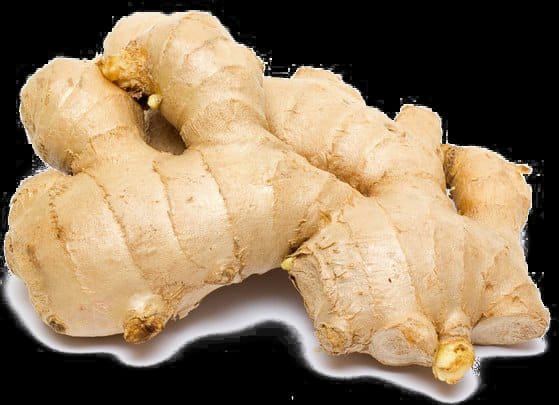
Ginger is a plant of Zingiberaceae family.
Botanical name is zingiber officinale.
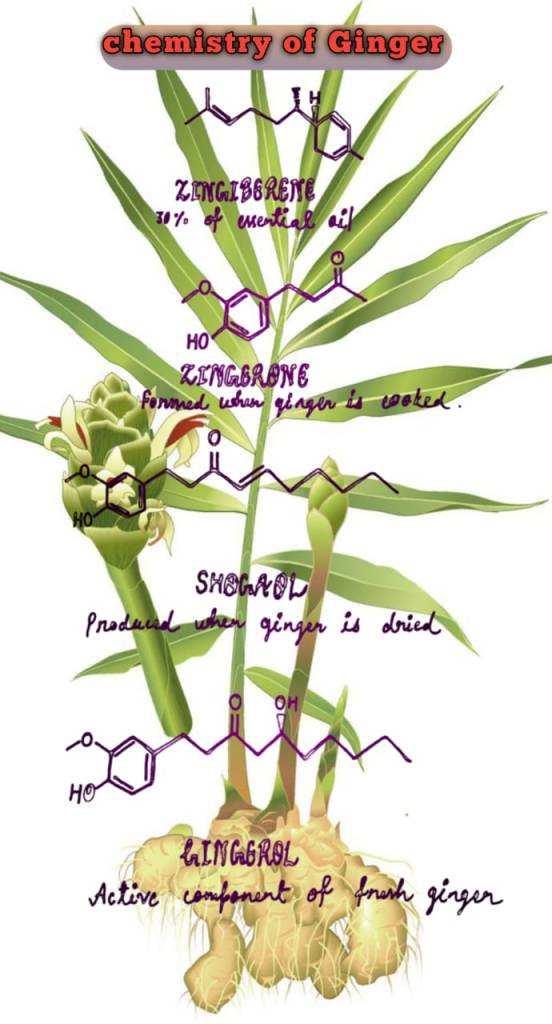
Ginger is a crop of tropical region, probably it is a crop of South and East Asia ie India or China. It is known by different names in each state like Aadu (Gujarati), Adrak (Hindi), Ale (Marathi), Allayu (Telugu) etc.Ginger rhizome contains a compound gingerol and essential oils.Their hot sensation and pungent smell because of gingerol and flavours comes from Zingiberene.
Chemicals of Ginger
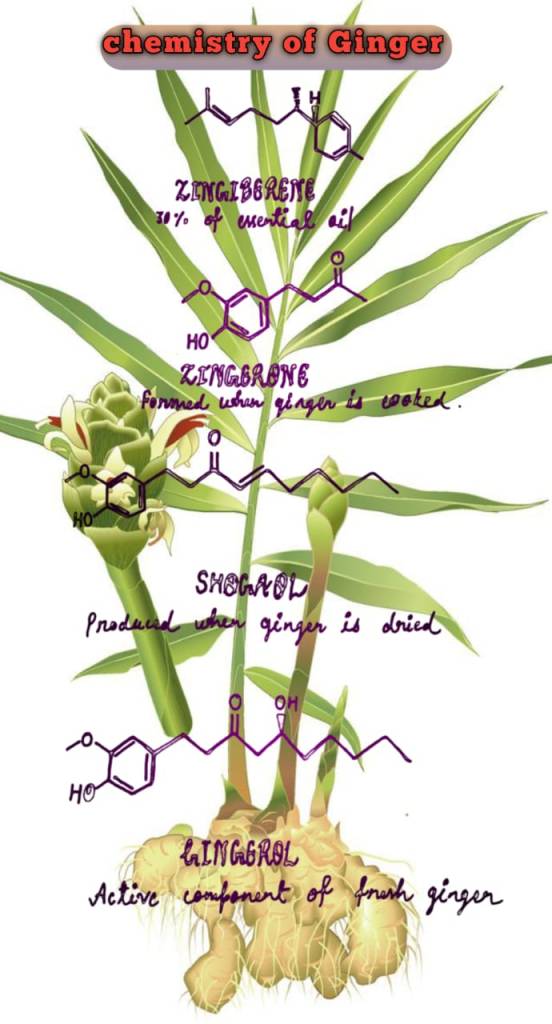
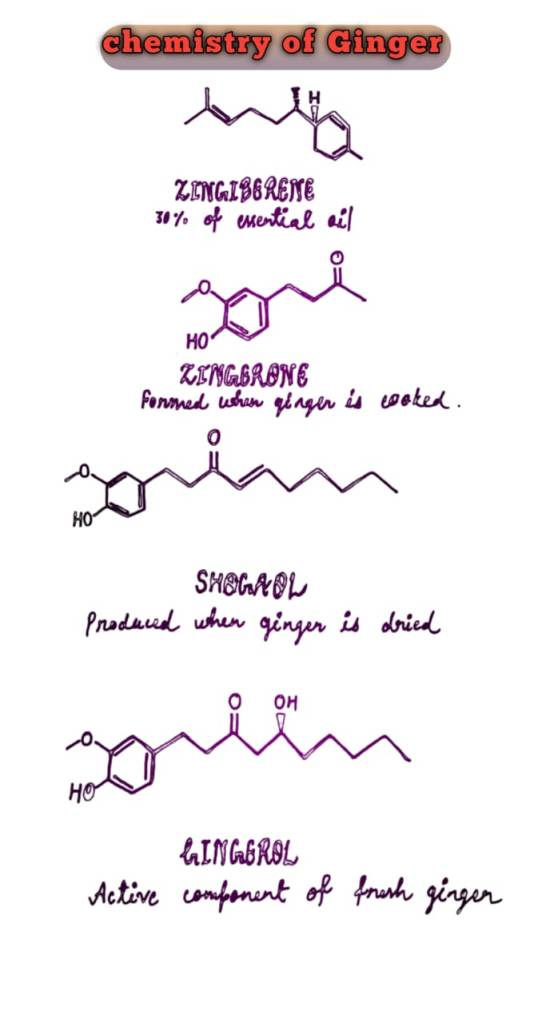
Ginger contain active constituents such as phenolic and terpene compounds.
Fresh Ginger rhizome contains β-sesquiphellandrene and ar-curcumin.Ginger is alkaline in nature.
Ginger is a common spice of India and China and it is used as a spice from ancient times.
Ginger used as a traditional ayurvedic medicine.
Sonth(dried ginger)
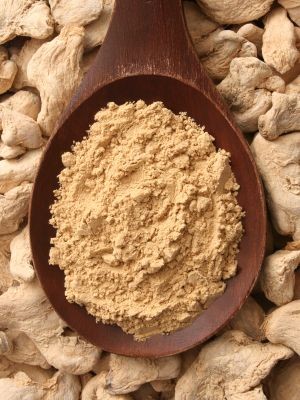
Ginger is used in various forms in foods and medicine’s.The dried form of ginger is known as ‘Sonth’ in India.
Common variety of India in which dried ginger is used that called ‘Sonth k laddu’.
Medicinal Value Of Ginger
Studies have shown that ginger has antibacterial activity it is a natural antibiotic and it is also used as antifungal,antimicrobial & anti inflammatory.Ginger has chemical that might reduce cold, nausea, vomiting, arthritis, migraine, hypertension etc.
Experts recommend take 3-4gm ginger in a days.After taking more grams you just face gastrointestinal issues such as constipation,heartburn,diarhhea etc.
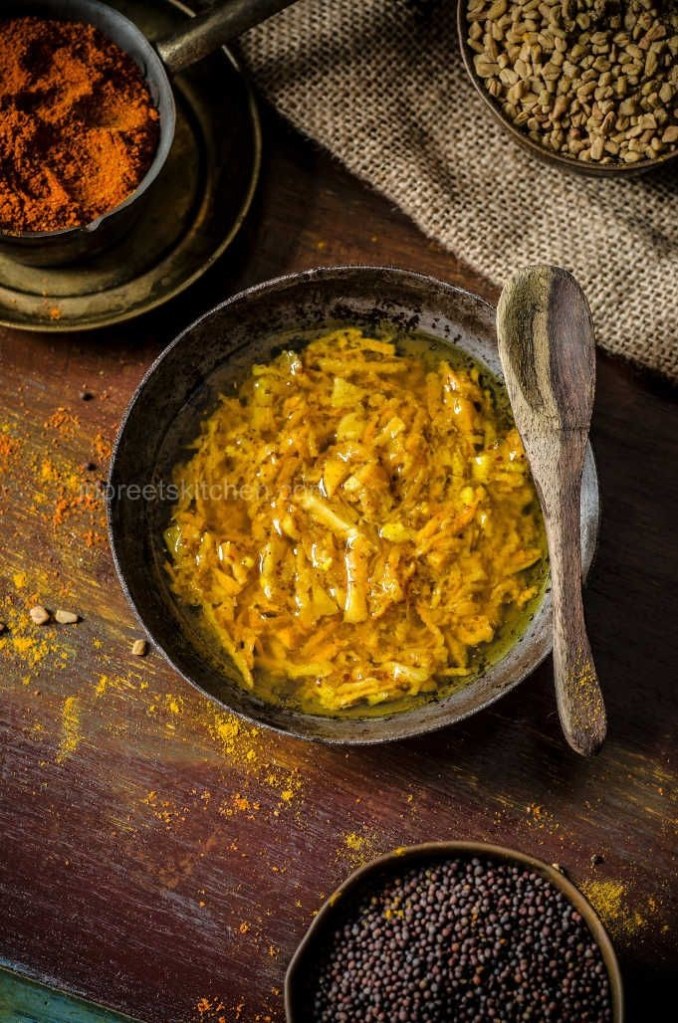
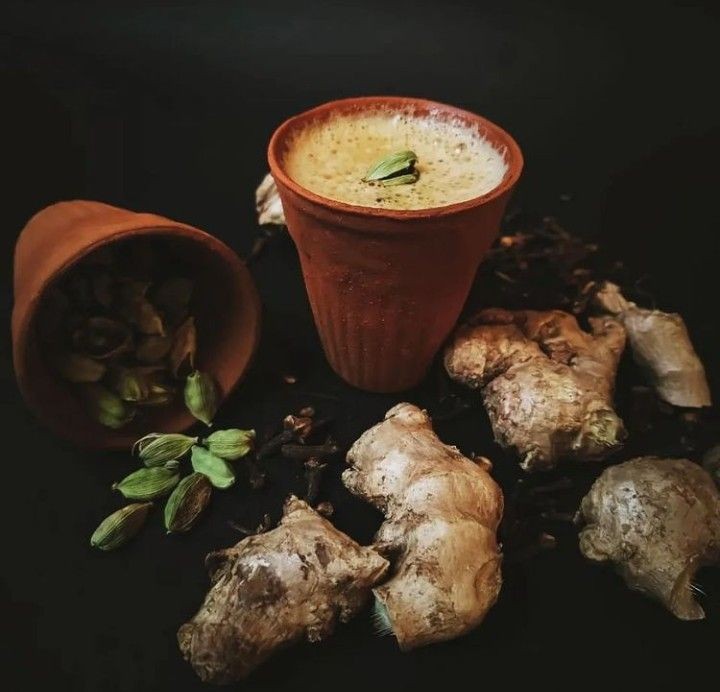
So enjoy your favourite spice ginger making various types of tea ,foods,pickles etc.
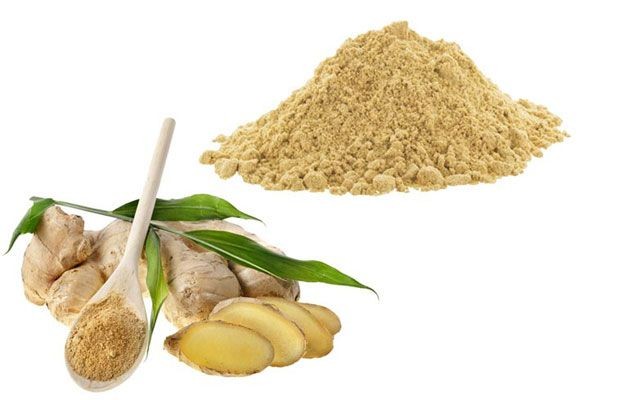
ठंड का मौसम हो और चाय बिना अदरक की हो 🤔असंभव!
लेकिन ऐसी क्या चीज है अदरक में की सभी इसे चाय में डालते हैं,खाने में डालते हैं और हर किसी के घर में ये पांव फ़ैला कर बैठी रहती है 😳मतलब की पायी जाती है।
आइए देखते हैं अदरक के कुछ वैज्ञानिक तथ्य और रसायन-
सामान्य परिचय
अदरक जिंजिबरेसी कुल का वनस्पति है।इसका वानस्पतिक नाम जिंजीबर ऑफिसिनेल है।अदरक उष्ण क्षेत्र की फसल है संभवतः यह दक्षिणी और पूर्वी एशिया में यानि की भारत या चीन की फसल है।
इसे प्रत्येक राज्य में अलग- अलग नामों जैसे आदु (गुजराती), अदरक (हिंदी), अले (मराठी), अल्लायु (तेलगू)इत्यादि नामों से जाना जाता है।
अदरक में पाए जाने वाले रसायन
अदरक क्षारीय प्रकृति का होता है।अदरक प्रकंद में एक यौगिक जिंजरोल और आवश्यक तेल होते हैं।
जिंजरोल की वजह से अदरक तीखे स्वाद और तीखी गंध का होता है और इसका फ्लेवर जिंजिबरिन नामक रसायन से आता है।
अदरक में फेनोलिक और टेरपीन यौगिक जैसे सक्रिय घटक होते हैं।
ताजे अदरक प्रकंद में β-sesquiphellandrene और ar-curcumin होता है।
सूखा अदरक(सोंठ) का उपयोग
अदरक का उपयोग खाद्य पदार्थों और दवाओं में विभिन्न रूपों में किया जाता है। अदरक के सूखे रूप को भारत में ‘सोंठ’ के रूप में जाना जाता है।भारत में सामान्यतः एक प्रकार का लडडू जिसमें सूखे अदरक का उपयोग किया जाता है जिसे ‘सोंठ का लड्डू’ कहा जाता है। जिसका सेवन बच्चे को जन्म देने वाली महिला अक्सर करती हैं। क्योंकि ये गर्म होता है और जोड़ों के दर्द में आराम देता है।
औषधि में उपयोग
अदरक भारत और चीन का एक आम मसाला है और इसे प्राचीन काल से मसाले के रूप में प्रयोग किया जाता है।
अदरक का उपयोग पारंपरिक आयुर्वेदिक औषधि के रूप में किया जाता है।
अध्ययनों से पता चला है कि अदरक में जीवाणुरोधी गतिविधि होती है यह एक प्राकृतिक एंटीबायोटिक है और इसका उपयोग एंटीफंगल, रोगाणुरोधी और सूजनरोधी के रूप में भी किया जाता है।
अदरक में रसायन होता है जो सर्दी, मतली, उल्टी, गठिया, माइग्रेन, उच्च रक्तचाप आदि को कम कर सकता है।
दुष्प्रभाव
विशेषज्ञ एक दिन में 3-4 ग्राम अदरक लेने की सलाह देते हैं। अधिक ज्यादा मात्रा लेने के बाद आपको बस गैस्ट्रोइंटेस्टाइनल परेशानियों जैसे कब्ज, सीने में जलन, दस्त आदि का सामना करना पड़ता है।
Thank you ❤️

 we've got chemistry